Capitalism's FAFO Moment

This week a major insurer warned that climate change was endangering capitalism as we know it. But what if it's already dead?
“Fuck around and find out”: what a wonderful phrase. The Hakuna Matata of the terminally online, FAFO describes the relationship between intended action and unintended consequence. It does so with a seductive combination of laziness and wit that can be flung at any individual unfortunate enough to be reaping, in real time, what they sowed.
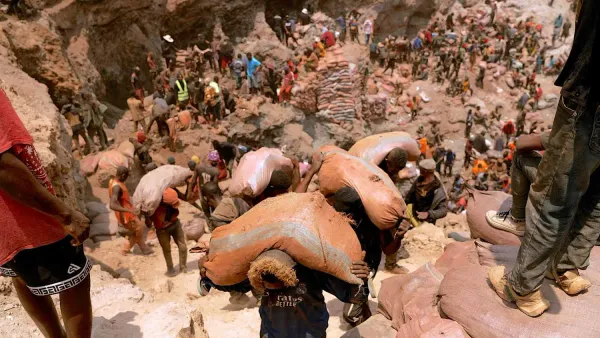
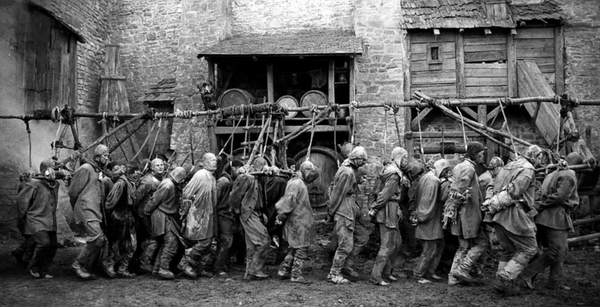
Unfortunately, FAFO is also the glib philosophy upon which our dominant mode of economics has been built. Modern civilization has been powered by a machine that regards Earth "as if it were a business in liquidation", as the ecological economist Herman Daly put it. The result? A polycrisis that is heating the atmosphere, punching through planetary boundaries, accelerating inequality and contributing to state repression everywhere we look. As Fire Weather author John Vaillant told me, “it's like we're just waking up from a 150-year coke binge.” We've effed around, and now we're effing out.
Acknowledging this, a senior executive at Allianz this week warned that climate change is in danger of killing capitalism. In many ways this is an odd claim—not least because, in the view of some scholars, climate change is explicitly the product of capitalism. This is why environmental historian Jason W. Moore says we're wrong to call this era the Anthropocene: Moore points out that, far from being caused by the human species per se, rapid global warming has been brought about by our economic activity—and in particular the activity of colonialist powers. Which is why he terms our climate moment the Capitalocene.
If we accept Moore's argument, it leads us to the obvious conclusion that it is in fact capitalism that threatens to kill capitalism. But right now it's going to need to get in line, because it turns out there are other hitmen in town.
New Killers On The Block?
Take, for instance, the rise of technofeudalism, as proposed by Yanis Varoufakis, whereby a class of new feudal overlords—the tech billionaires—own and operate their own personal fiefdoms in which the rest of us are little more than a commodity. Varoufakis contends that the era of “cloud capital”, in which we possess only the illusion of choice within a phony online marketplace, marks the end of capitalism as we knew it. In the world of cloud capital, market competition simply ceases to be a thing, replaced by online mega-monopolies that funnel wealth ever upwards into the hands of Messrs Bezos, Musk and Zuckerberg.
On the other hand, if technofeudalism offers an Assassin’s Creed-style knifing of market capitalism in its bed, Team Trump in Washington, DC is tossing a succession of grenades in through the window. With his new round of tariffs on everyone including penguins, the former gameshow reality host and sexual assault enthusiast has reminded the world of what he actually believes: that trade is (in his words) bad, and that the engine of market competition is no match for a whimsical programme of personal avarice and weird grievances. In Trumpville, everything and everyone is secondary and subservient to the Great Ego. The immediate economic impacts have already been compared unfavourably to the Covid pandemic, and various world leaders are preparing for something at least on a par with the 2008 financial crisis.
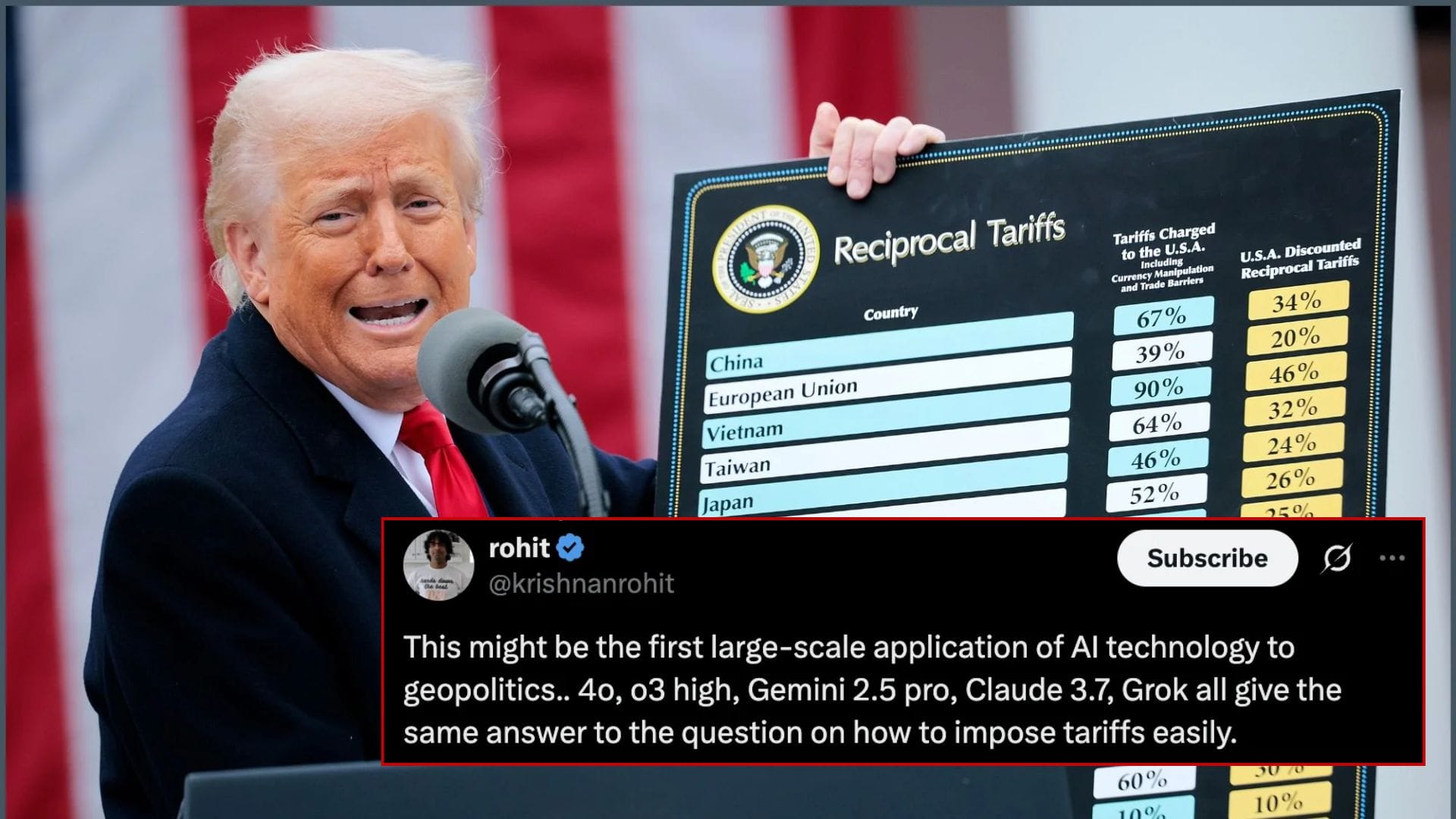
And yet, plenty of observers contend that the above two phenomena do not, either separately or in concert, present a mortal threat to capitalism. Some believe that Varoufakis's technofeudalism is simply an extension of monopoly capitalism, and is therefore largely consistent with the view of capitalism offered by critics like Marx. Others note that capitalist America did, in fact, survive the disastrous 1930 Smoot-Hawley Tariff Act, to which Trump's latest geopolitical vaudeville act is being unfavourably compared, so it's reasonable to conclude it'll survive this one.
So perhaps reports of the system's death, or of the efficacy of its upstart would-be killers, have been greatly exaggerated. After all, it can scarcely be denied that the billionaire techbros and Trumps of the world are mere symptoms of the capitalist leviathan. These puny humans are no match for the might of the system that capitalism itself exists within and feeds upon.
That system is nature.
Gaia Shrugs
What economists like Herman Daly pointed out, and more conventional proponents like Nobel laureate Angus Deaton have belatedly acknowledged, is that by emphasising only competition and efficiency, and completely ignoring things like ethics, human irrationality and, er, the entire planet on which we live, capitalism has nurtured the seeds of its own destruction.
This is, fairly directly, a Marxist critique: while Marx's first contradiction of capitalism focuses on capital and labour, political economists like James O'Connor have outlined a second contradiction, stemming from "capitalism’s economically self-destructive appropriation and use of environment". This boils down to capitalism's ability to take something valuable and turn it into pollution in exchange for money. The pollution is waved away as an "externality", for which no one pays—except, of course, they do. If the actual cost to the planet and human society was factored into the price of a gallon of gasoline, Americans would be paying at least $15 a gallon, rather than the roughly $3.30 they're paying right now. By a similar token, the true cost of a hamburger ought to be $200+.
Most well-informed capitalists do understand this; some acknowledge it; but all seem (or at least claim to be) powerless to do anything about it. Thus we get the unedifying spectacle of banks like Morgan Stanley announcing that they intend to look for profits in a world that has warmed by a catastrophic 3 degrees Celsius, surmising that under such circumstances, the market for air conditioning will go ballistic. Few serious climate or systems researchers believe a 3-degree world will be able to sustain organised civilisation, let alone a banking system; hell, even The Economist understands this.
But global finance and the business world at large pretends otherwise. Bloomberg's Mark Gongloff rounded the issue up nicely this week when he pointed out that Wall Street, by continuing to place bets on fossil fuels and against a habitable planet, is ensuring its own destruction. Gongloff suggests that banks purposefully investing for a 3-degree world "is a bit like my wife saying, 'My husband’s not sticking to his diet, so I might as well buy him more donuts.' Also, the donut shop gives her a cut of the profit on every dozen."
But the inconvenient truth, as one very senior executive at a major European bank told me in 2023, is that capitalism as it currently exists—and has always existed—values short-term profits far more highly than it does long-term planning. This is perfectly exemplified by former HSBC exec Stuart Kirk asking "who cares if Miami is six metres underwater in 100 years?" Less crass financiers take the position of "we'd love to do something, but our hands are tied". In the view of such industry insiders, capitalism not only cannot save itself—it shouldn't be expected to try.
So while it might not yet be true to say "we're all Marxists now", anyone paying attention has by this stage conceded he had a point. Massive insurers like Allianz and Swiss Re have been forced to become capitalism's canary in the coalmine by virtue of their very function, which is to price risk. Unlike traders, bankers and politicians, who are rewarded principally for a combination of cognitive dissonance and deliberate myopia, insurers are forced to perceive the bigger picture. Because actuaries are systems thinkers, they're professionally compelled to illuminate the This Is A Crisis signal. Yet still, capitalism's internal logic dictates that these professionals must be ignored.
Which seems to lead to the conclusion that either capitalism goes, or we do. My friend Julia Steinberger, who characterises Trump 2.0 as a regime of "cataclysm capitalism", states that this is a matter of educating, organising and strategising, in that order. Because the exhausted maxim that "it is easier to imagine an end to the world than an end to capitalism" ignores an even weightier truth: that necessity is the mother of invention. Alternative visions of society, still almost completely absent from our billionaire owned-and-operated mainstream discourse, must be assessed and acted upon.
Capitalism is now firmly out of its YOLO summer and limping piteously through its FAFO winter. Who, or what, will catch up with it first?
The Climate Laundry will not continue without financial support. Please support this project by upgrading to a paid subscription.
Follow me on Bluesky @davidrvetter.bsky.social