Frightened Little Boys: What ‘The Nerd Reich’ Reveals About The Lords Of Silicon Valley
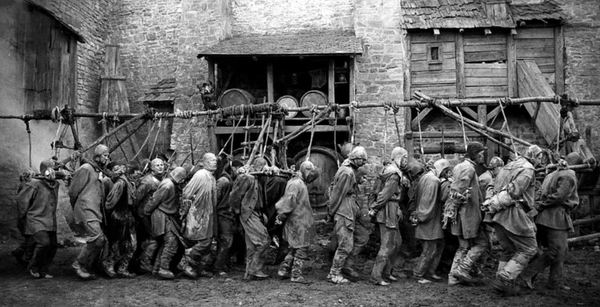
The Nerd Reich plays out as a grotesque pantomime in which we are forced to watch some of the most powerful people alive rediscover, at colossal, lethal expense and with a straight face, problems that our species has solved many times over, across thousands of years.
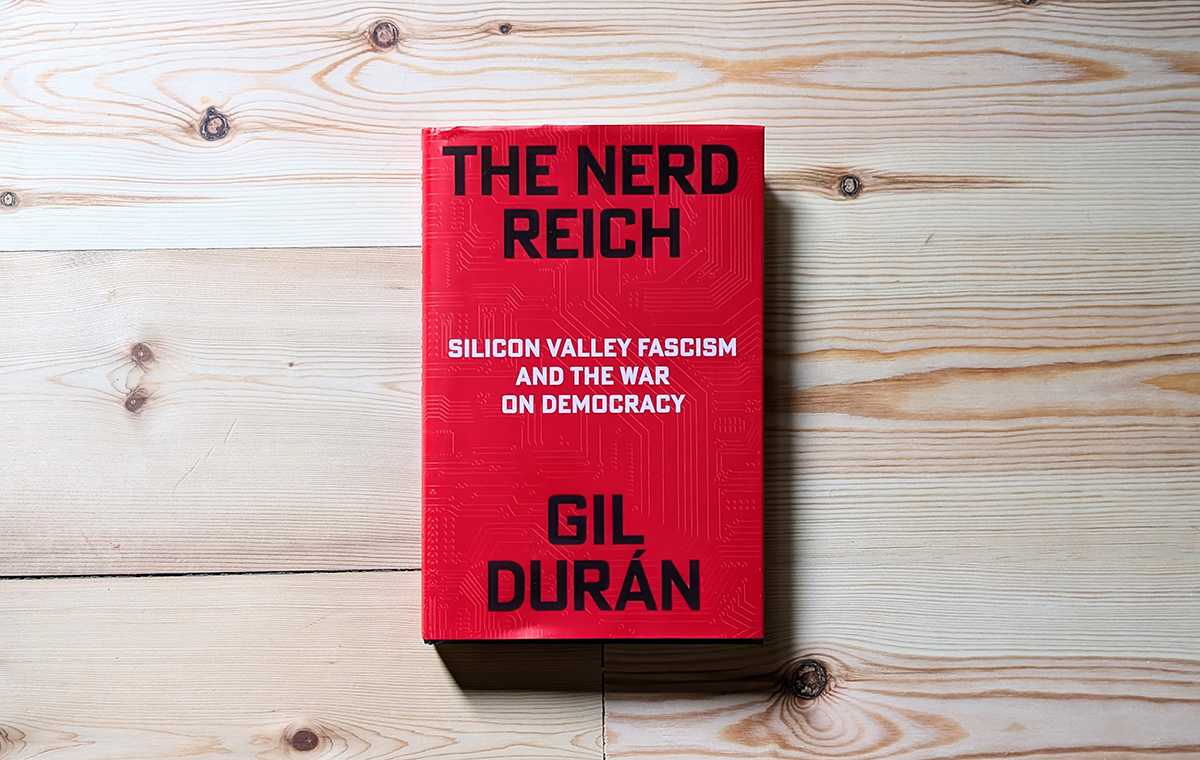
Book Review: The Nerd Reich: Silicon Valley Fascism and the War on Democracy
By Gil Durán
Avid Reader Press
352pp
What has been will be again, what has been done will be done again; there is nothing new under the sun. - Ecclesiastes 1:9
Gil Durán's astonishing The Nerd Reich has spent its first months in print doing precisely what its jacket copy promises: rattling the commentariat. With the dexterity of a master craftsman, Durán has told the story of how a cohort of tech billionaires, led by Paypal founder Peter Thiel, quietly built the pseudointellectual scaffolding for an authoritarian turn in American politics—a framework subsequently adopted by a sitting U.S. administration.
Through painstaking reporting and a wealth of evidence, Durán shows convincingly that the goal of these men is nothing short of the eradication of democracy as we know it. Yet, while the book couldn’t offer a more stark warning about the threat that Silicon Valley’s high priests pose to humanity, it can also be read as a tale of human frailty and weakness. On one side a non-fiction geopolitical thriller; on the other, a merciless, darkly comic character study.
That’s because, when you strip away the billions of dollars, the surveillance contracts and network-state pitch decks, what Durán is actually critiquing is a cast of frightened little boys. There’s the tech magnate who never got over being told, at three years old, that everything dies; the lonely teenager who found the only audience that would have him in an anonymous chat room and never really left it; a gaggle of men who mistake their childhood trauma for a worldview, and that worldview for a destiny.
Hurt People Hurt People
Take Curtis Yarvin, the "lonely teenager" in question, who became Silicon Valley’s favorite far-right sophist. Durán reports that as a socially ostracized "weird, threatening, disturbing alien" of an adolescent, Yarvin found his only real community in a forum on Usenet, where he built a troll persona and kept a "kill file"—a running blacklist of people he'd decided weren't worth reading. An ex-girlfriend, Meredith Tanner, put it plainly: "He does not view humans as being as real as he is. He's a solipsist ... He viewed people as social experiments."
That hurt teenager never really left the chat room. Blogging under the pseudonym Mencius Moldbug decades later, he became the intellectual architect of the "Dark Enlightenment," caught Peter Thiel's eye, and turned up at Thiel's own inauguration party in 2025—the isolated kid with a blacklist, all grown up in a room in which stood men who wield the power of death.
Again and again, the biographies Durán presents form starkly similar shapes. Each character becomes cognizant of his mortality, experiences social rejection, and must contend with the fact that other people must be persuaded, rather than simply ridden over roughshod. From the dark ravings of Yarvin, to the faux-religious pronouncements of Thiel, to the tragic hubris of Bryan Johnson, the venture capitalist who wanted to live forever before revealing an autoimmune diagnosis, the attempts of Durán’s subjects to come to terms with their feeble mortality seem to merge into one.
In a particularly illustrative sketch, Durán recounts Johnson's 2024 "Don't Die Summit" in San Francisco. Appearing onstage in a building on Pier 35, Johnson, introduced as "the man who doesn't age", led the crowd in a breathing exercise before vendors hawked "DNA scans, 'biological age' tests, and a Peloton knockoff 'AI bike' that supposedly delivers a full workout in just five minutes." Johnson's own regimen included injecting his teenage son's blood plasma into his veins—Durán notes flatly that "the plasma swap didn't work"—alongside various supplements and, in a detail that stretches the bounds of self-parody, a cold-pressed olive oil he sells under the brand name Snake Oil. At one point in the show, billionaire Naval Ravikant, invited onstage, earnestly admonished the audience to watch out for "snake oil", apparently without registering that he was standing next to a literal bottle of it.
Trapped In A Loop
If history repeats itself first as tragedy, second as farce, then Duran’s book could be read as a comedy at which you’d have to laugh, were the stakes not so high. Seen from this POV, The Nerd Reich plays out as a grotesque pantomime in which we are forced to watch some of the most powerful people alive rediscover, at colossal, lethal expense and with a straight face, problems that our species has solved many times over, across thousands of years.
This, above all else, is the metanarrative that Duran’s work seems to imply. Twenty-four centuries ago, at opposite ends of the Eurasian landmass, two men arrived at versions of the same warning. In Greece, Socrates told the Athenians that the unexamined life is not worth living; that a life spent acquiring, without ever turning that scrutiny inward, is not actually a life at all. Around the same time, the Buddha was naming that mechanism with more precision: dukkha, the built-in unsatisfactoriness of existence, arising from tanha, or craving—not for any one thing, but for permanence, control, and a self that could finally stop being afraid.
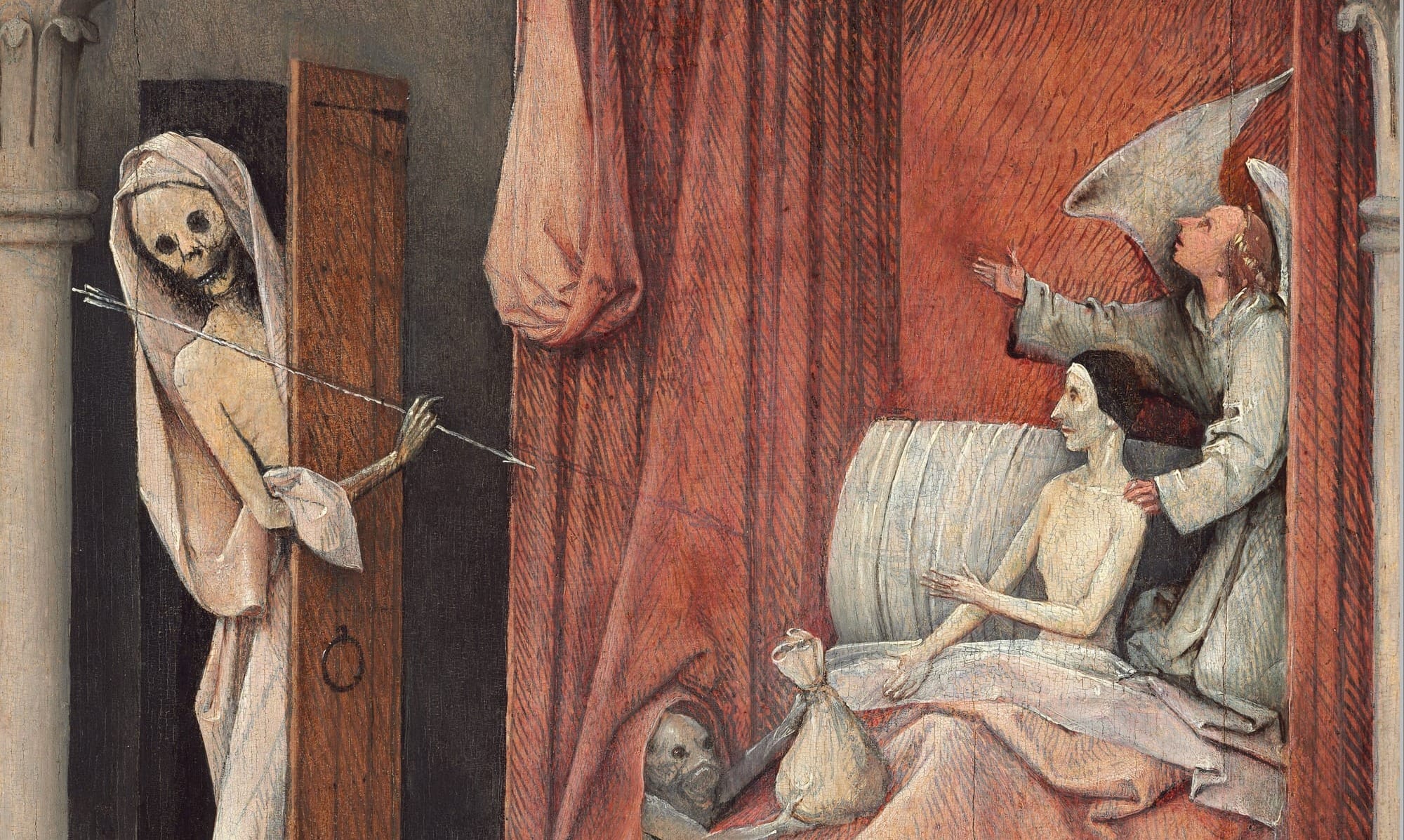
German historian Karl Jaspers titled this simultaneous flowering the Axial Age, as if humanity had to learn the same lesson across different geographies, just in case it didn’t stick across time and space. Over the subsequent centuries, further great thinkers made the lesson their central thesis: Aristotle named eudaimonia, the good life, being not a stockpile but the exercise of virtue, set against the vice of wanting more than one's due. The Stoics sharpened this point, finding that wealth, power and even life itself are "indifferents," unworthy of desire or dread, the only freedom worth having being the freedom of a mind that has stopped mistaking what it can buy for what it can never buy back.
The little boys in Durán's book, ringed by mountains of money and security details and longevity contracts are, according to every philosophical tradition, trapped in a prison of their own minds.
I Don't Think, Therefore I'm Not
The thesis would be considerably less damning if the men in question were simply oblivious to all this. But Marc Andreessen, a central figure in the network Durán traces back to Thiel and the author of 2023's Techno-Optimist Manifesto, has gone on record to reject the examined life with something approaching pride. Asked on a podcast what drives him, Andreessen didn't dodge the question so much as disqualify it. "If you go back, like, 400 years ago," he said, "it never would have occurred to anybody to be introspective.” With a nervous titter, Andreessen dismisses two and a half millennia of careful deliberation, Socrates and the Buddha included, as a Freudian-era fad.
The problem for everyone else is, of course, that declining to “do the work” only guarantees that someone else must do it. Much as our system of economics refuses—indeed is unable—to “internalize the externalities,” one of the foremost beneficiaries of that system hopes that a similar malfunction will carry his conscience downstream. Out of sight and out of mind, those pollutants and forever chemicals persist but do not matter. After all, they are poisoning other lives.
Be that as it may, the history of thought that Andreessen and his ilk wave off has already named his malady, in vocabulary far older than "introspection." In Pali it is known as bhava-taṇhā, the desire for the self to persist, bounded and intact, forever. It’s what connects Thiel's cryonics arrangements and the childhood terror beneath them, Sam Altman's plan to have his brain uploaded to a computer, and Bryan Johnson's stated ambition to "become God". Scaled up to politics, this thirst manifests in seasteads and network states and "sovereign individuals" seeking a permanent, uncontested territory, out of the reach of democracy and even biology. Far from the strange vagaries of that thing called empathy, which the sieg-heiling Elon Musk describes, contrary to all available evidence, as humanity's fundamental weakness.
And here, hand in hand with bhava-taṇhā, comes vibhava-taṇhā, the craving for annihilation, frequently spoken aloud by Silicon Valley’s nabobs. This is the fantasy of hitting reset rather than sitting with a world you cannot fully own, echoed in Nick Land's "nothing human makes it out of the near-future," Mike Solana's "if you aren't trying to destroy the world, you aren't trying hard enough," and Thiel's own theology of welcomed collapse.
The frightened boy’s left fist grips; the right smashes the table; both hands controlled by the same refusal to accept that nothing can be made permanent. The prescribed cure, according to every tradition that has bothered to name the disease, is the discipline of sustained, unflinching self-examination—the precise practice that Andreessen announced he has opted out of, rebranding his fear and laziness a productivity hack. The tragedy of these small, frightened men is that they have steadfastly refused the one piece of available wisdom that might have spared everyone else the consequences: that thousands of human beings throughout history have run this exact experiment with obscene wealth and absolute power, and left the results for all to see.
Escape Velocity
Both as a chronicle of Silicon Valley's insidious political project and a bestiary of some of the 21st century’s most revolting personalities, The Nerd Reich is a crucial document. Durán has built an emergency beacon from a story about towering ego dressed up as prophecy, and wealth deployed in a bid to conquer all people and things, including mortality.
Arguably, what's missing from Durán’s account is a cohesive response to the question “what is to be done?” He correctly points out that the rise of tech fascism is a direct result of governments' complicity with big business, along with abrogation of their responsibility to curb corporate greed and refusal to support antitrust measures. For this species of societies to prevail requires a reassertion of the demos; of people power. And yet, in his assertions, Durán urges readers to seize “the power of hyperstition—of making the impossible possible through sheer force of will — just as the billionaires like to do.” It's an unexpected note to end on: hyperstition is the very mechanism the author has identified as tech right’s principal weapon: the manufacture of reality through belief and narrative in place of argument or institution-building. Does treating it as a tool of liberation suggest that even Durán, in his final chapter, hasn't fully escaped the gravitational field of the men he's describing?
Perhaps this unsettling note, more than any single chapter, is what makes The Nerd Reich so compelling. None of us has any firm grasp on how we, either collectively or individually, have been compromised. A presidency bought. A global information environment captured. A surveillance architecture wired into the bones of states. Durán's book must not be taken as a warning about what could happen. Far more frightening is that this is a forensic record of what's already taken place. That makes The Nerd Reich the closest thing to required reading that contemporary political journalism has to offer.